Trados Studio is a powerful CAT tool that allows translators to complete large-scale translation projects with different internal parties, not only translating there, but also collaborating with colleague translators and editors/reviewers, and storing up and managing translation memories. It also helps both the language service providers and the clients save time and money, and get better-quality translation works.
Here, I’m going to share my experience, workflow and some tips of doing a translation project.
Step 1: A project kick-off meeting – understand your customer’s needs.
It’s true to all industries and all professions. And it also helps you work more efficiently. So, always have a kick-off meeting with the clients and ask them for all you need to know and to have.
Tip 1: ask for original files, instead of uneditable files such as PDFs or images. This will greatly help you improve your work efficiency.
Tip 2: ask for the clients style guide – if they don’t have one, ask as much as possible about their requirement on translation.
Step 2: Statement of Work / Project Proposal
After the kick-off meeting, get back to your customer with a proposal or statement of work.
This will work as a summary of what’s been covered in the kick-off meeting, and then give answers/feedbacks on the issues brought about during the meeting. The content may include the following parts:
- Project description, stating the project goals, target audience, and customer requirements (if applicable).
- Resources & deliverables, listing out what resouces you will prepare for this project, including software, reference materials (e.g. a glossary or a style guide), and human resource; besides, you may also want to list out what deliverable files that you will send to your customer.
- Quotation: Run an analysis report in Trados for the source test, understanding how many words you are going to translate from scratch, how many for editing based on translation memories (TMs) and how many fuzzy matches to handle. Then, you will be able to make a quotation based on the word counts of each category. The below information is important to look at in the Trados analysis report.

Tip 3: don’t forger the payment terms & conditions for the quotation, including quotation expiry date, payment terms and relevant account details.
Tip 4: consider 10% project management (or production) fee, small project (or minimum charge), and incentives for customers to settle the payment on time (or as early as possible).
- Outline of work, to walk your customer through the process of your preparation, translation and finalization.
Tip 5: Make sure that this has to be as simple as possible, better in a flow chart with few words to indicate the steps. Visualization is the key.
Tip 7: Include timeline along the workflow – and keep it!
Step 3: File preparation
Extract the texts into Trados. Use Pseudo Translation function to check if your file-prep is correctly done.
Tip 8: Pseudo Translation is a great function to help you make sure that your files are safe befor proceeding to the next stage and no rework will be needed afterwards. This is extremely important if you work with different linguists fro multiple locales for the same project.
A Pseudo Translation will look like:
Source:

Target (Pseudo): you will see clearly which line is not successfully prepared (the crossed one in below image), as it failed to be translated in Trado. And you will need to figure out the issues, whether it’s because you missed to extract texts from certain file properties, or it’s that the text is in the image and couldn’t be extracted.
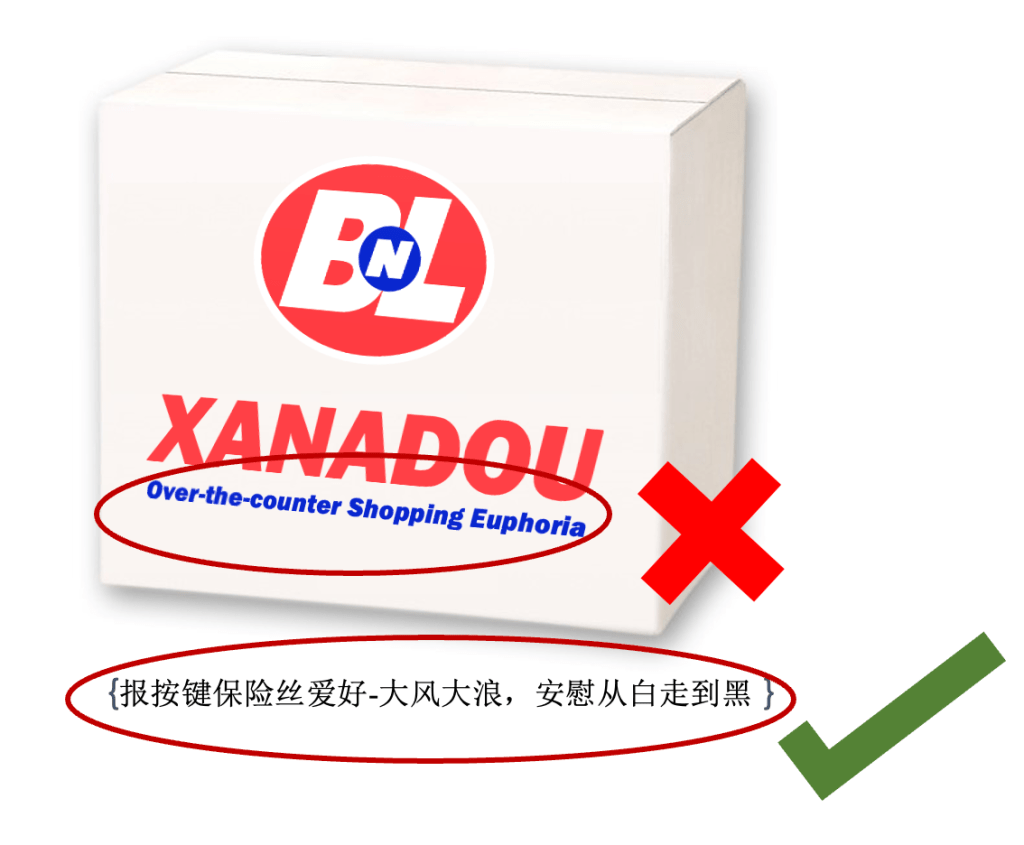
Step 4: Translation – review/editing – translated file output, using:
- termbases and translation memories that are stored in your Trados; and
- Regex to effeciently update/correct formatting at one go (Find & Replace). Below is an example of using Regex in Find & Replace.
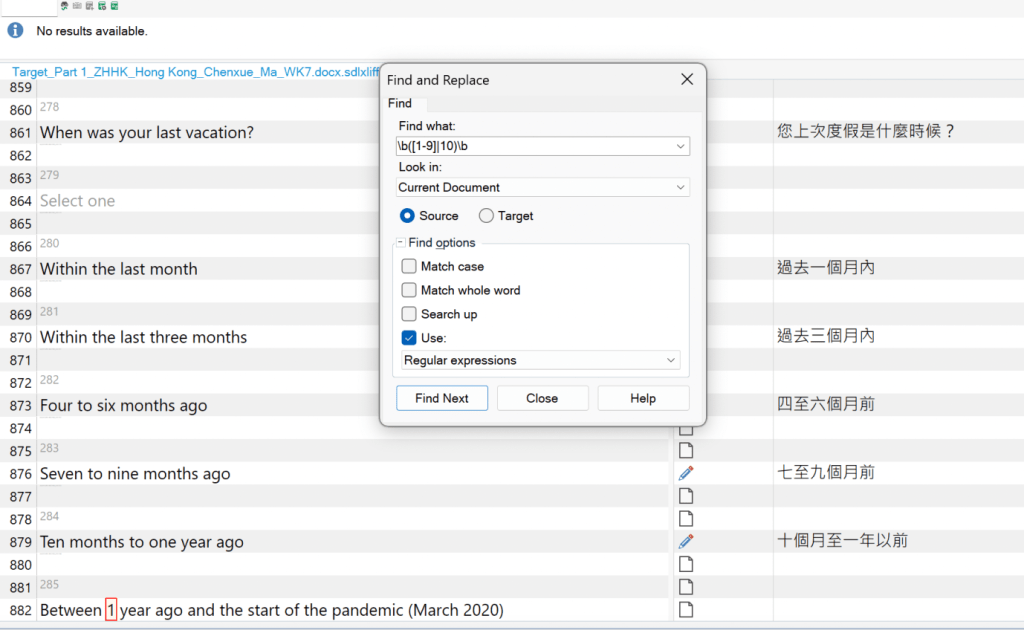
Tip 6: Use Regex101 or Regexr for anything related to Regex – It is painful to learn, but rewarding!
Tip 7: Keep a record for all Regex you work out by yourself – you will use them one day and be thankful for your effort!
Here‘s mine – and I’ll keep updating this list in the future!
Step 5: Formatting adjustment and finalization
Make sure your final deliverable translation file is formatted correctly according to the customer’s style guide.
Step 6: Project delivery and payment tracking.
Tip 8: Nowadays, in the translation industry, Net 30/45/60 terms are quite common, considering SO much money that a translator can make. So, don’t feel shy to remind/push customers to pay on time – or as earlier as possible!
 南方以南 | The Morning Snow
Leave a comment